Featurebase vs Nolt 2026: All-In-One Suite or Minimal Board?
8 min readUpdated August 13, 2026
On this page▾
Featurebase and Nolt sit at opposite ends of the feedback-tool spectrum. Featurebase calls itself “the modern support & product suite” — feedback boards, roadmap, changelog, surveys, a help center, a support inbox, and an AI agent, all in one subscription. Nolt is a deliberately minimal voting board built by a 2-person team: users submit ideas, vote, and see a roadmap. That’s the product.
So comparing them isn’t really about which one has the better feature X. It’s about how much tool you actually want to own — and how you’d rather pay for it: per admin seat (Featurebase) or per board (Nolt).
This guide puts both through pricing, features, and scaling scenarios so you can decide which end of the spectrum fits your team. Full disclosure: we build fdback, a flat-rate tool that sits between the two. It comes up near the end, but the goal here is a fair Featurebase-vs-Nolt call.
Quick Verdict
Pick Featurebase if: you want feedback, support, help docs, and AI consolidated into one platform, your team is small enough that per-seat pricing stays sane, or you qualify for its 86% startup discount.
Pick Nolt if: you want one clean voting board with a roadmap, unlimited admins, and SSO at a low price — and you’re fine announcing releases somewhere else, because Nolt has no changelog on any plan.
Pick something else if: you need the complete feedback loop (board, roadmap, changelog, voter notifications) without paying per seat or giving up the changelog. That’s the gap both tools leave open.
Two Opposite Philosophies
Featurebase’s pitch is consolidation. Every plan includes both its Product Suite (boards, roadmap, changelog, surveys) and its Support Suite (unified inbox, live chat, help center). The AI agent, Fibi, can resolve support conversations on its own — billed at $0.49 per resolution on top of your seats. If you’re currently paying for a feedback tool, a help desk, and a docs site separately, Featurebase wants to replace all three.
Nolt’s pitch is restraint. One board, custom statuses, a roadmap, and unusually for this price point, SSO on the cheapest plan. There’s no AI, no automation, no announcement feed — duplicate merging and spam moderation are manual work. Reviews note the small team ships slowly, and the most-requested missing feature, a changelog, has gone unbuilt for years.
Neither philosophy is wrong. But they attract very different buyers, and the pricing models make that concrete.
Pricing Comparison
Featurebase charges per admin seat: every teammate who manages feedback or answers tickets costs $29–99/month, while end users are unlimited. Those are annual prices — paying monthly costs more per seat.
Nolt charges per board: $29/month gets you one board with unlimited users, posts, and admins; $69/month raises the limit to five boards. Monthly billing exists ($39 and $89 respectively), and there’s no usage metering of any kind.
| Featurebase | Nolt | |
|---|---|---|
| Free plan | 1 seat, no AI, no integrations | None — 10-day trial only |
| Entry plan | Growth, $29/seat/mo (yearly) | Essential, $29/mo (1 board) |
| Mid plan | Professional, $59/seat/mo | Pro, $69/mo (5 boards) |
| Top plan | Enterprise, $99/seat/mo | Enterprise, custom |
| Billing options | Annual, or a higher monthly rate | Annual or monthly |
| Usage fees | $0.49 per AI resolution | None |
| Admins | Priced per seat | Unlimited on all plans |
| End users | Unlimited | Unlimited |
Full plan-by-plan breakdowns live in our Featurebase pricing guide and Nolt pricing guide.
What Teams Actually Pay
Solo founder: Featurebase’s free plan (1 seat) beats Nolt outright, since Nolt has no free tier. Once you need AI, a custom domain, or integrations, Featurebase Growth and Nolt Essential both land at $29/month — a genuine tie, with very different contents.
3-person team, one product: Nolt Essential stays at $29/month because admins are unlimited. Featurebase Growth is $87/month (3 × $29), and if you want user segmentation you’re on Professional at $177/month. Nolt is 3–6x cheaper here.
5-person team using Featurebase’s AI heavily: Professional runs $295/month in seats, and 500 AI resolutions add another $245. Nolt Pro is $69/month flat — but of course, Nolt gives you none of the support suite that money buys.
The pattern: Nolt’s per-board pricing ignores team size entirely, so its advantage grows with every teammate you add. Featurebase’s per-seat model multiplies with headcount, but each seat carries a far bigger product.
Feature Comparison
| Feature | Featurebase | Nolt |
|---|---|---|
| Feedback board + voting | ✅ | ✅ |
| Public roadmap | ✅ | ✅ |
| Changelog | ✅ | ❌ |
| Voter notifications | ✅ | ❌ |
| Surveys | ✅ | ❌ |
| Support inbox + live chat | ✅ | ❌ |
| Help center | ✅ | ❌ |
| AI features | ✅ (agent metered) | ❌ |
| SSO | Enterprise plan | ✅ from $29/mo |
| Embedding | Native widget | Iframe only |
| Unlimited admins | ❌ | ✅ |
The Changelog Gap
This is Nolt’s single biggest weakness. You can mark a board item complete, but there’s no announcement feed and no automatic “your feature shipped” email to the people who voted for it. The highest-leverage moment in the entire feedback workflow — telling a voter you built their request — simply isn’t supported. Featurebase closes that loop natively: ship, publish a changelog entry, voters get notified.
SSO — Nolt’s Surprise Win
Nolt includes single sign-on on its $29/month Essential plan. Featurebase reserves admin SSO for Enterprise at $99/seat/month. If SSO is a hard requirement on a small budget, this one line item can decide the whole comparison in Nolt’s favor.
Integrations
Nolt Essential connects to Slack, Discord, GitHub, and Trello; the $69 Pro plan unlocks Jira, Linear, Asana, Monday, Intercom, Microsoft Teams, and Zapier/Make. Featurebase gates integrations behind Growth and puts API access and webhooks on Professional. Neither approaches Canny’s ecosystem, but both cover the common cases — Nolt just makes you jump a $40 tier for PM-tool sync.
Moderation and AI
At 50 feedback posts, manual moderation is fine. At 500, it isn’t. Featurebase brings AI duplicate detection and automation (workflows and SLAs arrive on Professional); Nolt gives you manual merging, and even its moderation filters are Pro-only. Teams with real feedback volume will feel this difference within months.
Who Should Pick Featurebase
-
Teams consolidating a feedback tool, help desk, and docs site into one bill — the bundle can genuinely cost less than the sum
-
Companies under 2 years old with fewer than 6 employees, who qualify for the 86% startup discount plus a free year of AI
-
Support-heavy products where an AI agent resolving tickets at $0.49 each pays for itself
-
Anyone who needs the shipped-feature loop: changelog, voter notifications, surveys
Who Should Pick Nolt
-
Teams of any size that want exactly one thing: a clean board where users vote
-
Organizations that need SSO without enterprise pricing
-
Companies allergic to metered billing — Nolt has zero usage-based fees
-
Products with low feedback volume, where manual moderation stays manageable
The Honest Verdict
For most SaaS teams, Featurebase is the more complete product and the safer default — it covers the entire feedback loop and throws in a support platform. Its risks are financial, not functional: seats multiply with hires, AI fees float with support volume, and monthly billing carries a premium over the annual rates.
Nolt wins narrower cases decisively: unlimited admins at $29/month is unbeatable for large teams with simple needs, and cheap SSO is a genuine differentiator. But buying a feedback tool in 2026 without a changelog means accepting a permanently open loop, or paying for a second tool to close it — which erases the price advantage.
If you’re torn, the tiebreaker question is: when you ship a requested feature, how will the voters find out? If your answer is “Featurebase tells them,” you have your tool. If your answer is “a tweet, maybe,” Nolt will quietly cost you the retention wins that feedback tools exist to create.
A Simpler Alternative to Both
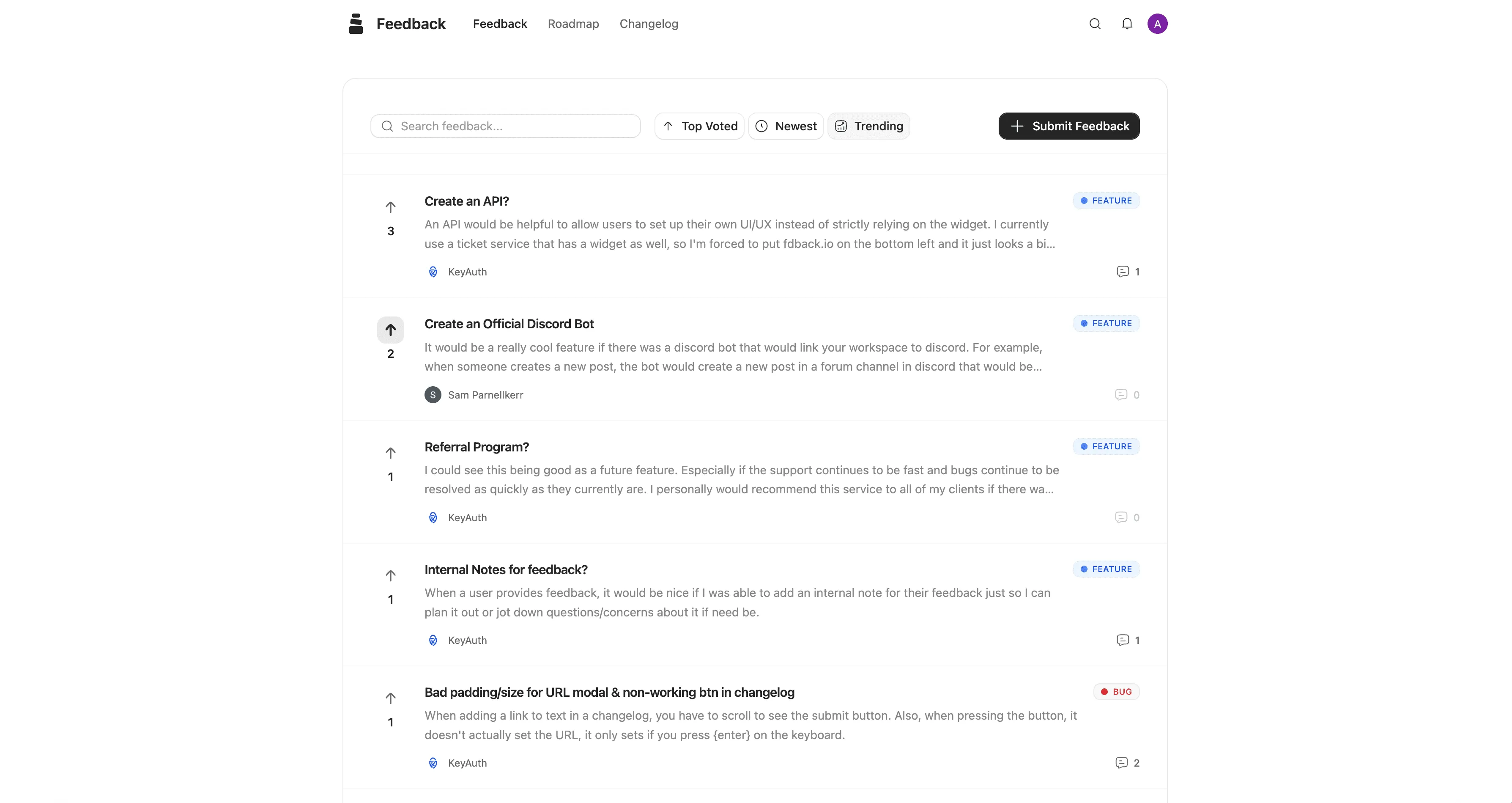
There’s a middle path between a $29-per-seat suite and a $29-per-board minimal tool. fdback takes Nolt’s flat, unmetered pricing philosophy and adds the pieces Nolt refuses to build: changelog, automatic voter notifications, a native in-app widget, and AI moderation — for $15/month flat, with a free plan to start. No per-seat fees, no per-board fees, unlimited boards and admins.
What it doesn’t have: Nolt’s SSO, or Featurebase’s support inbox, live chat, and help center. It’s the feedback loop and nothing else, priced accordingly.
See the head-to-head details in our fdback vs Featurebase and fdback vs Nolt comparisons. For the wider field, see the Featurebase alternatives list.
FAQ
Is Nolt cheaper than Featurebase?
For teams, almost always. Nolt’s $29/month covers unlimited admins, while Featurebase charges $29–99 per seat — a 3-person team pays $29 on Nolt Essential versus $87+ on Featurebase Growth. For solo founders it flips: Featurebase has a free plan and Nolt doesn’t.
Does Nolt have a changelog like Featurebase?
No. Nolt has no changelog and no voter notifications on any plan, despite years of user requests. Featurebase includes a changelog with automatic notifications to voters when their requested feature ships.
Which tool has a free plan?
Only Featurebase — one seat with boards, roadmap, changelog, surveys, live chat, and a 50-article help center, but no AI, custom domain, or integrations. Nolt offers a 10-day trial, then starts at $29/month.
Which is better for SSO on a budget?
Nolt, clearly. SSO is included on its $29/month Essential plan, while Featurebase locks admin SSO behind Enterprise at $99/seat/month.
What if I want Nolt’s flat pricing but Featurebase’s feedback loop?
That’s the exact gap fdback fills: board, voting, roadmap, changelog, and voter notifications at $15/month flat with a free plan — no seats, no boards limits, no usage meters. You give up SSO and the support suite.
Still Deciding?
If the choice between a per-seat suite and a changelog-less board feels like picking your compromise, try the option built around the loop itself. fdback covers collect, vote, plan, ship, and notify — for less than either tool’s entry price.
More insights to explore
The 7 Best Productboard Alternatives in 2026 (Honestly Compared)
Productboard runs $19–59/maker/mo with credit-capped AI, and has no changelog or public voting. We compare 7 alternatives for feedback, roadmaps, and shipping.
Nolt vs Sleekplan 2026: Which Budget Feedback Tool Grows With You?
Nolt is $29/mo for one board with no changelog; Sleekplan starts free but meters seats and views. Which budget feedback tool still fits in a year?
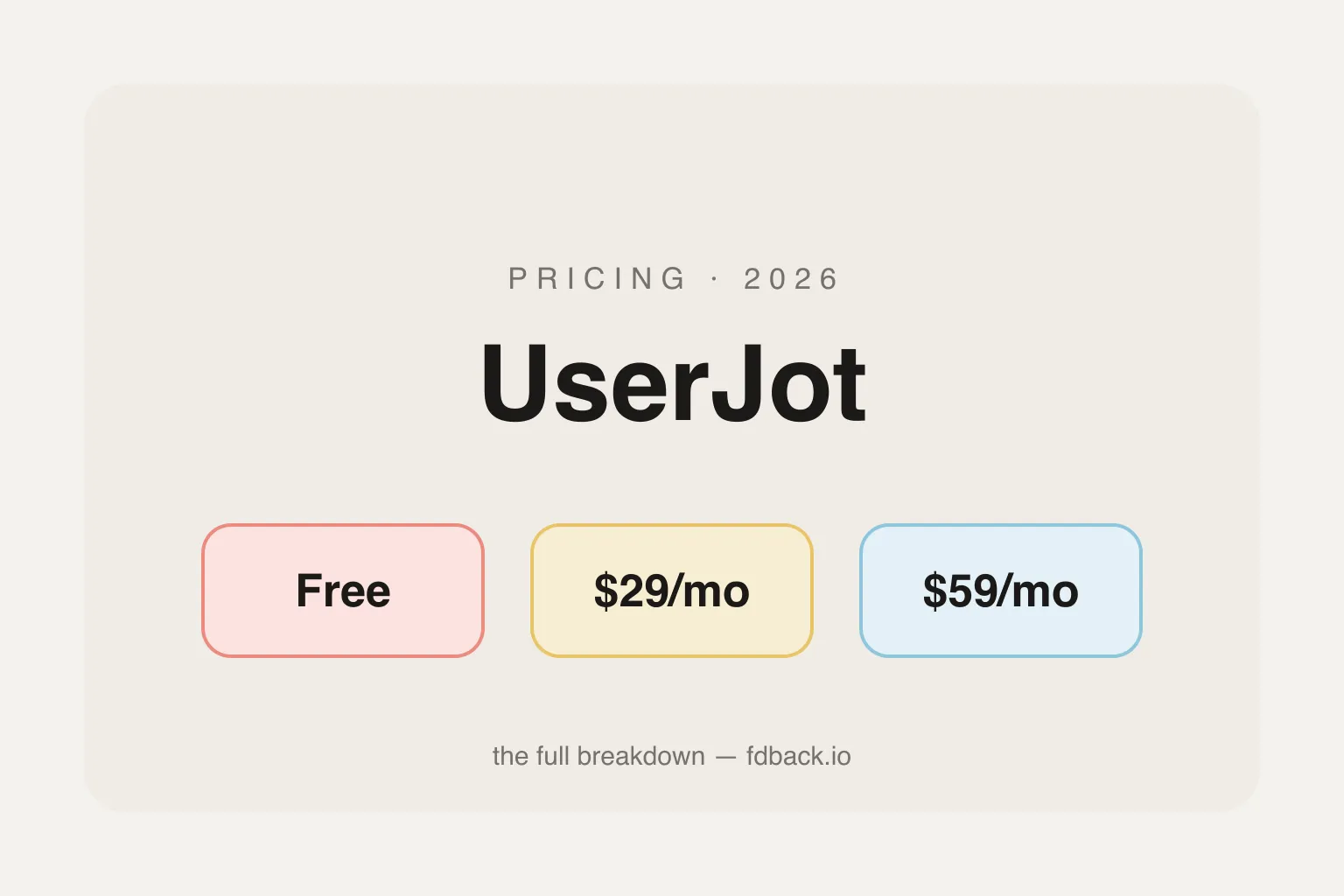
UserJot Pricing Explained: What You Actually Pay in 2026
UserJot costs $0–$59/month flat with unlimited users on every plan. Full 2026 breakdown of what Free, Starter, and Professional actually include — and how it compares to fdback's $15/mo.
Changelog vs Release Notes: What's the Difference (and Which Do You Need)?
Changelogs and release notes are not the same thing. Clear definitions, a side-by-side comparison, and guidance on when your SaaS needs each one.
Canny vs Nolt 2026: Full Platform or Deliberately Simple?
Canny is a full product-ops platform; Nolt is one deliberately simple board. We compare pricing, features, and the missing changelog to pick a winner.
Beamer Pricing Explained: What You Actually Pay in 2026
Beamer starts simple, but pricing can grow with your needs. See Beamer plans, limits, add-ons, and a cheaper alternative for SaaS teams.