Canny vs Nolt 2026: Full Platform or Deliberately Simple?
8 min readUpdated August 13, 2026
On this page▾
Most “X vs Y” comparisons pit two tools fighting over the same buyer. Canny vs Nolt isn’t that. These two products have opposite theories about what a feedback tool should even be — and figuring out which theory matches your needs settles the decision faster than any feature checklist.
Canny’s theory: feedback is a workflow. Collect it, deduplicate it with AI, segment voters by revenue, sync requests into Jira or Linear, publish a roadmap, announce ships in a changelog, notify every voter automatically. Nolt’s theory: feedback is a board. Users post ideas, vote, and see a roadmap — and everything beyond that is scope creep the 2-person Nolt team has deliberately refused to build.
We build fdback, a third option that sits between them, so we have a horse in this race — it’s covered in its own section, and everything before that is a straight Canny-vs-Nolt evaluation.
Quick Verdict
Pick Nolt if: you want the least possible tool — one clean voting board with SSO, flat predictable pricing, and zero configuration — and you announce releases somewhere else.
Pick Canny if: you need the loop closed — changelog, voter notifications, PM-tool sync, AI triage — and your engaged user count is low enough that tracked-user pricing stays sane.
Pick neither if: you want Nolt’s simplicity and a changelog and a low flat price. That combination exists, just not in these two products — details near the end.
What Nolt Deliberately Leaves Out
Nolt’s restraint is the product. But you should know exactly what’s on the cutting-room floor before committing, because some of these gaps are permanent — users have asked for several of them for years.
No changelog, on any plan. You can mark a request complete, but there’s no announcement feed and no “the feature you voted for just shipped” email. The highest-leverage moment in the entire feedback cycle — telling a voter you built their thing — has no native mechanism in Nolt. See our Nolt pricing breakdown for the full gap list.
No voter notifications. Related but distinct: even status changes don’t trigger the kind of automated loop-closing that turns passive voters into advocates.
No AI anything. Duplicate detection, auto-tagging, spam filtering — all manual. At 50 posts this is trivia; at 500 posts, you’re the moderation system.
Iframe-only embedding. Nolt has no native widget. Its iframe approach has documented issues in Safari and Firefox thanks to third-party cookie restrictions, so the in-app experience varies by browser.
A 2-person team. This keeps Nolt focused and stable, but development is genuinely slow — reviews consistently note that long-requested features take years or never arrive.
None of this is hidden or accidental. Nolt is minimal on purpose. The question is whether your product’s feedback needs stay inside that minimalism.
What Canny Piles On
Canny is the inverse: it’s been accumulating capability since 2017 and now reads like a product-ops platform that happens to include a board.
The core loop is complete on every plan — board, voting, public roadmap, changelog. Above that, the Pro tier adds bi-directional sync with Jira, Linear, GitHub, Asana, and ClickUp, plus user segmentation and automation rules. The Business tier adds SSO plus Salesforce and HubSpot sync. And AI Autopilot — duplicate detection, smart replies, feedback captured automatically from Intercom and Zendesk conversations — comes with unlimited credits.
The cost of all this isn’t just money. Canny is a heavier product to configure and administer, and its admin seats are capped by plan (5 on Free, 10 on Pro) where Nolt allows unlimited admins everywhere.
Feature Comparison
| Feature | Nolt Essential ($29/mo) | Nolt Pro ($69/mo) | Canny (plan required) |
|---|---|---|---|
| Voting board | ✅ (1 board) | ✅ (5 boards) | ✅ all plans |
| Public roadmap | ✅ | ✅ | ✅ all plans |
| Changelog | ❌ | ❌ | ✅ all plans |
| Voter notifications | ❌ | ❌ | ✅ |
| Custom domain | ✅ | ✅ | Paid plans |
| SSO | ✅ | ✅ | Business (custom pricing) |
| Slack / Discord | ✅ | ✅ | Yes (paid plans) |
| Jira / Linear / Asana | ❌ | ✅ | Pro ($79/mo+) |
| Zapier / Make | ❌ | ✅ | Yes |
| AI triage | ❌ | ❌ | ✅ included |
| Embedding | Iframe | Iframe | Native widget |
| Unlimited end users | ✅ | ✅ | ❌ (tracked-user caps) |
| Free plan | ❌ (10-day trial) | ❌ | ✅ (25 tracked users) |
The SSO row deserves a highlight: Nolt ships single sign-on at $29/month, something Canny reserves for its custom-priced Business tier. If SSO is mandatory and budget is tight, Nolt is one of very few options in the entire category.
Pricing: Flat vs Scaling — and Where They Cross
Nolt’s pricing is board-based and flat: Essential at $29/month (annual; $39 monthly) buys one board, Pro at $69/month (annual; $89 monthly) buys five plus the deeper integrations. Unlimited users, posts, and admins on both. No free plan — just a 10-day trial.
Canny’s pricing scales with tracked users — anyone who posts, votes, or comments. Full mechanics in our Canny pricing guide, but the shape matters here because the two models cross over twice:
- Up to 25 engaged users: Canny’s free plan costs $0 — cheaper than Nolt Essential, and it includes the changelog Nolt lacks. At very low engagement, Canny is both cheaper and more complete.
- Around 100 engaged users: Canny’s cheapest paid plan is now Pro, starting at $79/month billed yearly (the old $19 Core tier is gone) — nearly triple Nolt Essential’s $29, though it buys the changelog and integrations Nolt refuses to build.
- Beyond that: the gap keeps widening — Canny’s price slider climbs as more users engage, and Canny auto-upgrades your bill pro-rata when you exceed your cap unless you set a spending limit (which then pauses tracking of new users’ feedback).
So the pricing verdict is mostly one-sided: once you outgrow Canny’s free plan, Nolt is the budget pick at every stage — and most successful products only push the gap wider, which is why Nolt’s flat rate ages better.
Who Should Actually Pick Nolt
- Teams whose entire requirement is “public board, votes, roadmap” — and who announce releases via email, social, or their own blog
- Anyone needing SSO under $50/month
- Products with high engagement where Canny’s tracked-user math turns ugly
- People allergic to configuration: Nolt setup takes minutes and there’s nothing to tune
Who Should Actually Pick Canny
- Teams that want shipped features to automatically notify every voter — the loop-closing Nolt structurally can’t do
- Product orgs whose requests must land in Jira, Linear, or Salesforce
- Teams processing enough volume that AI deduplication and support-conversation mining pay for themselves
- Anyone wanting to start free: Canny’s 25-tracked-user free plan is restrictive, but Nolt offers no free tier at all
The Honest Verdict
For a comparison this lopsided on features, the verdict is closer than you’d think.
Canny wins on completeness, and it isn’t close. Changelog, notifications, AI, integrations, native widget — Nolt competes on none of it. If feedback is a core workflow for your team, Canny is the only real candidate of the two.
Nolt wins on cost stability and honesty of scope. It does one thing, does it cleanly, and charges the same whether 50 or 50,000 people vote. Teams that pick Nolt knowing its limits tend to stay happy; teams that pick it hoping the changelog ships eventually have been waiting years.
The uncomfortable middle: if you need Nolt’s simplicity plus a changelog, you’d have to pair Nolt with a separate announcement tool — at which point the combined bill and fragmentation defeat the simplicity you came for. That middle is exactly where a third option makes sense.
A Simpler Alternative to Both
fdback was built for that middle: Nolt-grade simplicity and flat pricing, with the loop actually closed. For $15/month flat (free plan available), you get unlimited boards — versus one board for $29 on Nolt — plus the changelog and automatic voter notifications Nolt lacks, a native embeddable widget instead of an iframe, and AI moderation (duplicate detection, spam filtering, auto-tagging) included with no fees. Nothing scales with users, seats, or votes.
What you give up versus these two: Nolt’s SSO, and Canny’s Salesforce ecosystem with revenue segmentation — Jira sync itself is covered on fdback’s Pro plan. If neither is a dealbreaker, the head-to-head pages spell out the rest: fdback vs Canny and fdback vs Nolt.
FAQ
Is Nolt cheaper than Canny?
Almost always, once you’re past Canny’s free plan. Canny’s cheapest paid plan is Pro, starting at $79/month billed yearly, versus Nolt Essential at $29/month — and Canny’s price climbs with tracked users while Nolt stays flat. Canny is only the cheaper option while its 25-tracked-user free tier is enough.
Does Nolt have a changelog like Canny?
No. Canny includes a changelog on every plan, including free. Nolt has no changelog on any plan and no voter notifications, despite years of user requests — you can collect and vote on feedback, but you can’t announce what shipped.
Does either tool have a free plan?
Only Canny — its free tier covers 25 tracked users, which functions as an extended trial. Nolt offers a 10-day trial of Pro, then it’s $29/month minimum.
Which tool is better for SSO?
Nolt, decisively, on price: SSO is included on its $29/month Essential plan. Canny gates SSO behind its Business tier, which requires a custom quote.
Is there a tool with Nolt’s flat pricing but Canny’s changelog?
Yes — that gap between the two is where flat-rate tools like fdback sit: $15/month flat with unlimited boards and users, changelog and voter notifications included, plus a free plan. It skips SSO and deep PM/CRM integrations.
More insights to explore
Canny vs Sleekplan 2026: Is the Price Gap Worth It?
Sleekplan tops out at $38/mo while Canny can run into the hundreds. What the extra money buys, where Sleekplan's meters bite, and which tool to pick.
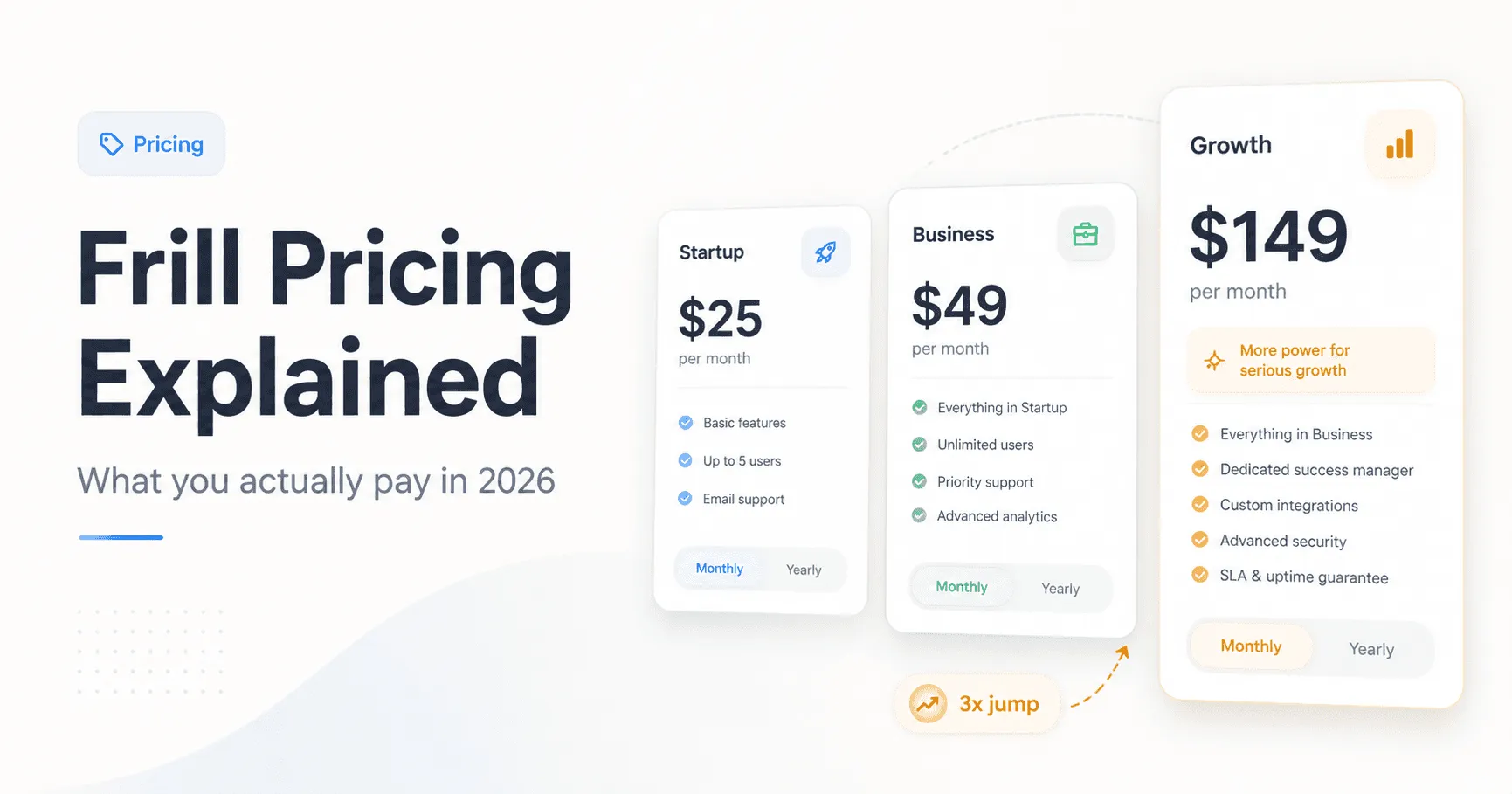
Frill Pricing Explained: What You Actually Pay in 2026
Frill starts at $25/mo, but surveys, privacy add-ons and white-label raise the real bill. Full 2026 cost breakdown plus a $15/mo flat alternative.
The 7 Best Productboard Alternatives in 2026 (Honestly Compared)
Productboard runs $19–59/maker/mo with credit-capped AI, and has no changelog or public voting. We compare 7 alternatives for feedback, roadmaps, and shipping.
Changelog vs Release Notes: What's the Difference (and Which Do You Need)?
Changelogs and release notes are not the same thing. Clear definitions, a side-by-side comparison, and guidance on when your SaaS needs each one.

How to Collect and Prioritize Feature Requests for a SaaS Product
Complete framework for collecting and prioritizing feature requests. Includes voting boards, scoring models, and tools that close the loop

Canny Pricing Explained: What You Actually Pay in 2026
Canny retired its $19 Core plan — paid now starts at $79/month and climbs with tracked users. Real 2026 costs, plan limits, and flat-rate alternatives.