Frill vs Sleekplan 2026: Add-Ons vs Meters — Which Costs Less?
8 min readUpdated July 30, 2026
On this page▾
On paper, Frill and Sleekplan are the two most directly comparable tools in the budget feedback space. Both bundle boards, roadmap, and changelog. Both offer surveys. Both avoid Canny-style tracked-user billing. Both advertise flat monthly prices under $50.
And both have a sticker price that isn’t the real price — just for opposite reasons.
Frill grows your bill through add-ons you choose: privacy is +$25/month, extra surveys +$25/month, white-labeling +$100/month. Sleekplan grows it through meters you don’t: team seats, AI credits, announcement views, popup views, and email sends all have caps, each with its own paid expansion.
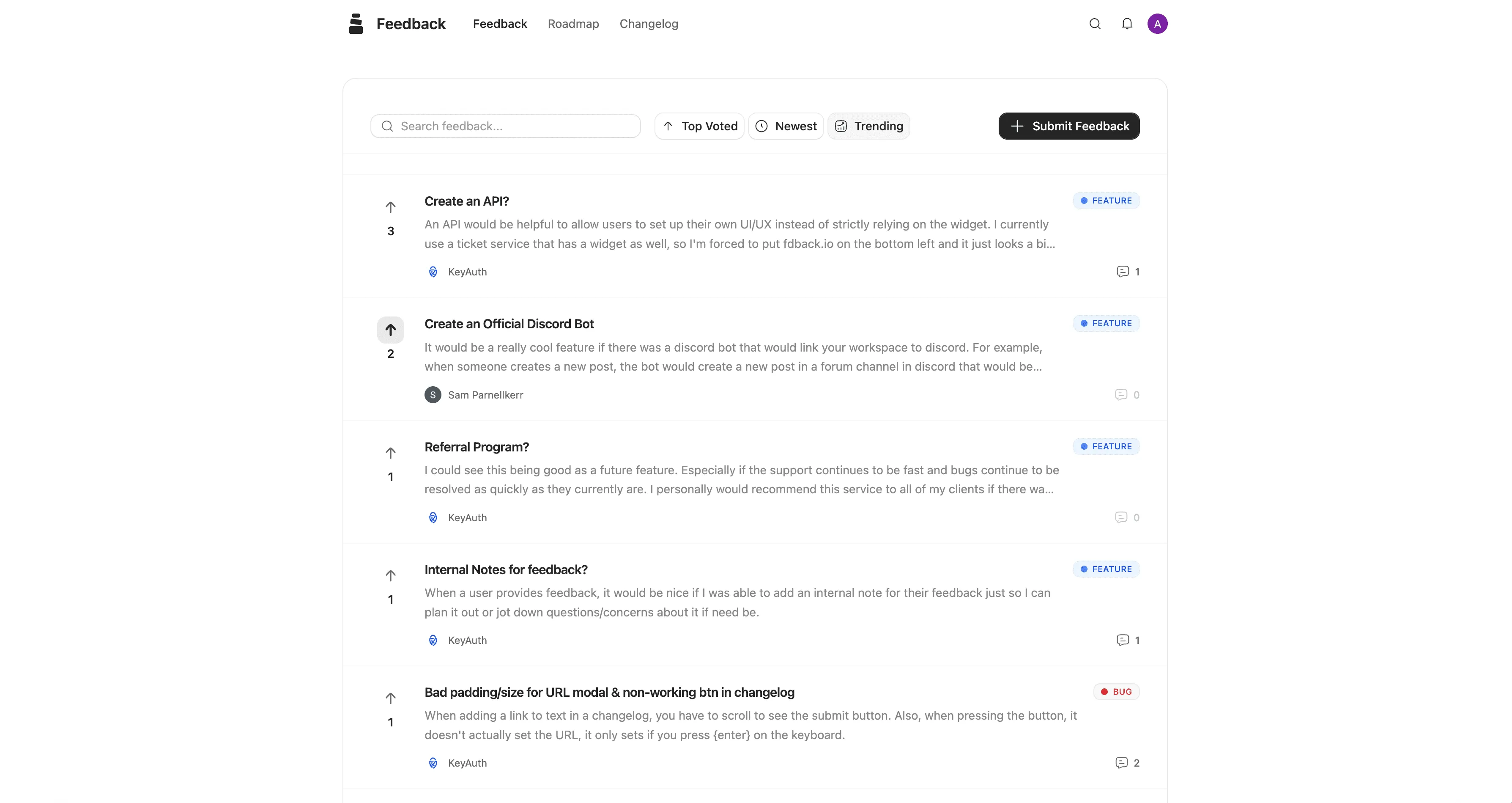
Understanding which failure mode fits your situation better is most of the decision. That’s what this guide is for. Full disclosure: we make fdback, a $15/month flat competitor to both — it appears near the end, and the comparison before that is played straight.
Quick Verdict
Pick Sleekplan if: you’re a solo founder or a team of 2–3 optimizing for lowest cost. The free Indie plan is genuinely usable, Starter is $13/month, and NPS/CSAT surveys are built in rather than sold separately.
Pick Frill if: your team is bigger than Sleekplan’s seat limits, you want GitHub/Jira sync at a flat price, or you value the more polished portal — and you’ve budgeted for the add-ons you’ll actually enable.
Pick neither if: you want one number on the invoice that never moves. Both tools’ real totals drift upward, one by choice, one by growth.
Two Ways to Hide a Price Increase
Before any feature talk, get clear on the pricing mechanics, because they behave very differently over time.
Frill’s add-ons are opt-in and fixed. You know exactly what privacy (+$25), surveys (+$25), or white-labeling (+$100) will cost before you turn them on, and the price doesn’t change afterward. The risk is sticker shock at decision time: a $49 Business plan with privacy and white-labeling is suddenly $174/month.
Sleekplan’s meters are automatic and scale with your audience. The Business plan caps announcement views around 30,000/month, popup views around 10,000, and email sends around 10,000 — numbers driven by your traffic, not your team. AI runs on monthly credits (1,000 on Starter, 5,000 on Business). The risk arrives later: the add-on spend kicks in precisely when your product takes off, whether or not you planned for it.
Neither approach is dishonest. But one asks you to predict your feature needs, and the other asks you to predict your growth — and most founders are bad at the second one.
Frill Pricing
| Plan | Price | What defines it |
|---|---|---|
| Startup | $25/month | 50 active ideas, 1 survey, unlimited teammates and tracked users |
| Business | $49/month | Unlimited ideas, 3 surveys |
| Growth | $149/month | Privacy, surveys, and white-labeling all included |
| Enterprise | From $349/month | SOC2, audit logs, dedicated hosting |
There’s no free tier — only a 14-day trial. The 50-idea cap on Startup is easy to underestimate: even a small customer base generates more than 50 active ideas over time, which quietly makes $49 the practical floor for growing products. Full math in our Frill pricing guide.
Sleekplan Pricing
| Plan | Price (annual billing) | What defines it |
|---|---|---|
| Indie | Free | Unlimited feedback and subscribers, board + changelog + roadmap, single admin |
| Starter | $13/month | 3 seats, 1,000 AI credits, CSAT/NPS surveys, SSO, API, webhooks |
| Business | $38/month | 10 seats, 5,000 AI credits, branding removal, custom domain, view/send caps with add-ons |
| Enterprise | Custom | Unlimited seats, SAML SSO, multi-workspace organizations |
Monthly billing runs roughly 20% higher, paid plans come with a 30-day no-credit-card trial, and billing is per workspace — a second product means a second subscription. Details in our Sleekplan pricing guide.
The Sticker Price vs the Real Price
Here’s where the two models produce very different invoices for the same needs:
| What you actually need | Frill real cost | Sleekplan real cost |
|---|---|---|
| Solo founder, testing the waters | $25/mo (no free plan) | $0 (Indie) |
| 2–3 people, public board + changelog | $25–49/mo | $13/mo (Starter) |
| Surveys beyond the basics | $49 + $25 add-on = $74/mo | Included from $13/mo |
| Your own domain, no vendor branding | $149/mo (Growth) or $49 + $100 add-on | $38/mo (Business) |
| Private feedback + white-label | $49 + $25 + $100 = $174/mo | Business tier at $38/mo covers branding + domain |
| Team of 12 managing feedback | Any tier — teammates unlimited | Business seats capped at 10; Enterprise territory |
Two patterns jump out. First, Sleekplan is dramatically cheaper for a branded portal — $38 vs $149 is the single largest gap in this comparison, worth over $1,300/year. Second, Frill is the only one of the two where headcount never touches the bill — unlimited teammates on every tier, versus Sleekplan’s 3-seat and 10-seat ceilings.
Feature Comparison
Both products cover the core loop, so the differences live at the edges.
| Frill | Sleekplan | |
|---|---|---|
| Board, roadmap, changelog | ✅ | ✅ |
| Surveys | 1–3 included, more via add-on | NPS/CSAT from Starter |
| AI | Partly behind add-ons | Credit-metered (1,000–5,000/mo) |
| White-labeling | $149 plan or +$100/mo | Included at $38/mo |
| Custom domain | — | Business plan |
| GitHub/Jira sync | ✅ on lower plans | Standard integrations, API, webhooks |
| Team members | Unlimited on all plans | 3 (Starter) / 10 (Business) |
| Free plan | ❌ (14-day trial) | ✅ (single admin) |
| UI polish | One of the cleanest in the category | Noticeably less refined |
A note on that last row, since it’s subjective: Frill’s interface is frequently cited as its standout quality, while Sleekplan’s most common criticism is that the UI lags behind competitors. If your feedback portal is customer-facing and brand-sensitive, that gap is worth an honest look during trials — Sleekplan’s 30 days gives you more room to judge than Frill’s 14.
Where Each Tool Wins
Sleekplan’s strongest arguments
-
A real free plan. Unlimited feedback with board, changelog, and roadmap at $0 isn’t a demo — it’s a working setup for any solo founder.
-
Surveys without surcharges. NPS and CSAT ship in the $13 Starter plan. Getting comparable survey headroom on Frill means the +$25/month add-on on top of your base plan.
-
Branding freedom at $38. The features that make a portal feel like yours cost a quarter of what Frill charges for them.
Frill’s strongest arguments
-
No seat anxiety. Support, design, and engineering can all triage feedback without anyone counting licenses. On Sleekplan, teammate number four forces the $38 Business plan regardless of any other need.
-
GitHub and Jira on cheap plans. Rare among flat-priced tools, and valuable if feedback needs to land in your dev workflow.
-
Costs you control. Every dollar above the base price is an add-on you deliberately enabled — nothing scales silently with your traffic.
The Honest Verdict
Sleekplan wins on price at almost every point that matters to small teams — entry cost, surveys, branding, and the existence of a free plan. If your team fits in 3–10 seats and your audience is modest, it’s hard to justify paying Frill more for the same core loop.
Frill wins as the team and the stakes grow: unlimited teammates, a more polished customer-facing experience, and predictable opt-in pricing instead of usage meters that tighten as your product succeeds. A 12-person team with a high-traffic changelog may genuinely find Frill’s $49–149 cheaper and calmer than Business-plan-plus-add-ons on Sleekplan.
And if you run multiple products, watch Sleekplan’s per-workspace billing — two products on Business means $76/month, which erases most of its price advantage in one line item.
The Flat-Price Alternative to Both
If this whole article reads like an argument about which hidden costs you’d rather have, there’s a third option built on not having them.
fdback charges $15/month flat — no seats, no idea caps, no AI credits, no view or email meters, no white-label surcharge. The Pro plan includes unlimited posts, voters, and team members, custom domain, branding removal, AI duplicate detection and auto-tagging, and 10 workspaces — so a second product doesn’t double the bill. There’s also a free plan with full features for one workspace.
The honest limitation: fdback doesn’t do NPS/CSAT surveys like Sleekplan or GitHub sync like Frill — though Jira sync is covered on the Pro plan. It’s the core feedback loop — board, roadmap, changelog, widget, voter notifications — done simply. See the head-to-heads at fdback vs Frill and fdback vs Sleekplan. For the wider field: Frill alternatives and Sleekplan alternatives.
FAQ
Is Sleekplan cheaper than Frill?
Usually, yes. Sleekplan starts free and its $38 Business plan includes branding removal and a custom domain — features that cost $149/month (or a +$100 add-on) on Frill. Frill only becomes the cheaper choice for teams too large for Sleekplan’s 10-seat Business cap.
Does Frill have a free plan like Sleekplan’s?
No. Frill offers a 14-day trial and then starts at $25/month with a 50-active-idea limit. Sleekplan’s Indie plan is free indefinitely for a single admin with unlimited feedback.
What does removing vendor branding cost on each tool?
On Sleekplan, branding removal comes with the $38/month Business plan. On Frill, it requires either the $149/month Growth plan or a +$100/month add-on on lower tiers — roughly four times Sleekplan’s price for the same outcome.
How do Sleekplan’s usage caps actually work?
The Business plan meters announcement views (30,000+/month), popup views (10,000+), and email sends (10,000+), with paid add-ons to raise each cap. AI features draw from monthly credit pools — 1,000 on Starter, 5,000 on Business. The caps track your audience size, so costs can rise even while your team and plan stay the same.
Which tool is better for a team of five or more?
Frill, structurally — teammates are unlimited on every plan, while Sleekplan Starter stops at 3 seats and Business at 10. If you want unlimited team members without Frill’s add-on prices, fdback includes them at $15/month flat.
More insights to explore

Nolt Pricing Explained: What You Actually Pay in 2026
Nolt costs $29–$69/mo per board with no free plan and no changelog. Every plan explained, real annual costs, and what you'd pay elsewhere for more.
Public Product Roadmap: The Complete Guide for SaaS Teams
Learn how to build a public product roadmap that reduces churn, builds trust, and turns users into advocates. Step-by-step guide with examples and tools.
Changelog vs Release Notes: What's the Difference (and Which Do You Need)?
Changelogs and release notes are not the same thing. Clear definitions, a side-by-side comparison, and guidance on when your SaaS needs each one.
Upvoty Pricing Explained: What You Actually Pay in 2026
Upvoty costs $15–$49/month flat with no free plan. Full 2026 breakdown of the new Power/Super/Hyper tiers, what each gates, and a $15/mo alternative with a free plan.
UserJot Pricing Explained: What You Actually Pay in 2026
UserJot costs $0–$59/month flat with unlimited users on every plan. Full 2026 breakdown of what Free, Starter, and Professional actually include — and how it compares to fdback's $15/mo.
Nolt vs Sleekplan 2026: Which Budget Feedback Tool Grows With You?
Nolt is $29/mo for one board with no changelog; Sleekplan starts free but meters seats and views. Which budget feedback tool still fits in a year?