
Canny Pricing Explained: What You Actually Pay in 2026
13 min readUpdated October 20, 2026
On this page▾
- How Canny’s Pricing Works
- Every Canny Plan Explained
- What You’ll Actually Pay: Real Cost Examples
- Legacy Plan Migration: What Happened in Late 2025
- What Canny Does Well
- Where Canny’s Pricing Becomes a Problem
- Canny vs. Alternatives: Price Comparison
- When Canny Is Still the Right Choice
- When to Look at Alternatives
- FAQ
Quick answer: Canny costs $0 or from $79/month, priced per tracked user rather than per seat. The Free plan caps at 25 tracked users total. Pro is $79/month billed yearly ($99 monthly) for 100 tracked users, then the price climbs with every band: $129 at 200, $279 at 500, $529 at 1,000 and $1,079 at 5,000 tracked users (yearly billing). Business (5,000+ tracked users) is custom. The former $19 Core tier was retired in 2026.
Canny’s pricing page now shows just two real options: a free plan, and a Pro plan that “starts at” $79/month. The $19 entry tier that used to sit between them is gone — as of 2026, there is no cheap way into Canny anymore.
And that “starts at” is doing heavy lifting. Your users submit feedback, vote on ideas, leave comments — the exact behavior you want — and a slider moves your price up with every band of tracked users. The $79 figure covers your first 100 tracked users; a board with real engagement pays multiples of it. Canny only shows those numbers when you drag the slider, so I dragged it and wrote every step down below.
This isn’t a bug. It’s how Canny’s pricing model works. And if you don’t understand it before you commit, you’ll hit a nasty surprise the moment your product starts gaining traction.
This guide breaks down every Canny plan, explains the tracked-user model that drives your real costs, shows what you’ll actually pay at different team sizes, and compares it to alternatives that don’t charge you more for collecting more feedback.
How Canny’s Pricing Works
Canny uses a tracked-user pricing model. Unlike tools that charge per admin seat or a flat monthly fee, Canny charges based on how many end users interact with your feedback system.
A “tracked user” is anyone who submits a post, votes on a request, or leaves a comment on your Canny board. If an admin submits feedback on behalf of a user, that user counts too. If Canny’s AI Autopilot feature captures feedback from a support conversation and attributes it to a user, that user becomes tracked as well.
This means your bill grows with engagement. The more successful your feedback program is — the more users participate, vote, and share ideas — the more you pay. It’s a model that effectively taxes the behavior you’re trying to encourage.
Every plan except Business has a tracked-user cap. When you exceed it, Canny automatically upgrades you to the next pricing tier unless you’ve set a spending limit. If you do set a limit, Canny stops tracking new users once you hit it — meaning feedback from new users is simply ignored.
Every Canny Plan Explained
Free Plan — $0/month
Canny’s free tier gives you the basics: a feedback board, a public roadmap, a changelog, unlimited posts, and unlimited boards. It sounds generous until you see the limit: 25 tracked users.
That’s 25 people who can submit, vote, or comment — total, not per month. If you embed a feedback widget in your app, you can burn through 25 tracked users in a single day. The free plan is effectively a trial, not a usable tier.
Other limits worth knowing: no custom domain (your board lives at yourname.canny.io), no internal comments or custom statuses, and only basic integrations — Slack, Teams and Discord notifications plus Intercom and Zendesk capture, but no Jira, Linear, GitHub, Zapier, or other project management connections. You also can’t remove Canny’s branding.
For context, most Canny alternatives offer free plans with far higher or unlimited user caps. The 25-user limit is one of the most restrictive free tiers in the feedback tool space.
The Retired Core Plan (RIP, $19/month)
Canny used to offer a Core plan at $19/month — the affordable on-ramp. As of 2026 it’s gone from the pricing page. There is no entry-level paid tier anymore: the jump is straight from the 25-user free plan to Pro at $79/month. If you’re reading older reviews that mention a $19 plan, they’re describing a product that no longer exists.
Pro Plan — Starting at $79/month (billed yearly)
The Pro plan is now Canny’s only self-serve paid tier. It includes project management integrations (Jira, Linear, GitHub, Asana, ClickUp, Azure DevOps), Zapier, custom domains, internal comments, advanced privacy, and 10 owner/manager admin seats.
The $79 covers 100 tracked users. Past that, the slider moves your price up in steps. Here is every step I could read off canny.io/pricing in October 2026:
| Tracked users | Pro, billed yearly | Pro, billed monthly | Per year (yearly billing) |
|---|---|---|---|
| 100 | $79/mo | $99/mo | $948 |
| 200 | $129/mo | $161/mo | $1,548 |
| 300 | $179/mo | — | $2,148 |
| 400 | $229/mo | $286/mo | $2,748 |
| 500 | $279/mo | $349/mo | $3,348 |
| 700 | $379/mo | — | $4,548 |
| 1,000 | $529/mo | $661/mo | $6,348 |
| 1,750 | $679/mo | — | $8,148 |
| 2,250 | $779/mo | — | $9,348 |
| 3,000 | $879/mo | — | $10,548 |
| 5,000 | $1,079/mo | $1,349/mo | $12,948 |
Up to 1,000 tracked users, every extra 100 people who vote or comment add $50/month. Monthly billing costs 25% more than yearly at every step (Canny frames it as “20% off” for paying yearly). A dash means I didn’t record the monthly price at that step.
Pro is the first plan where the tool becomes genuinely useful for product teams. But the combination of tracked-user scaling and the retired entry tier means the real question isn’t “can I afford $79” — it’s “where does my board sit in that table today, and where will it be a year from now.”
What Pro still doesn’t include: SSO integrations (Okta, OIDC, Entra ID, OneLogin), CRM integrations (Salesforce, HubSpot), branding removal, and email white-labeling. All of these require the Business plan.
Business Plan — Custom Pricing
The Business plan is for teams with 5,000+ tracked users and requires contacting Canny’s sales team for a quote. It adds SSO integrations, while CRM integrations, branding removal and email white-labeling are marked as paid add-ons on top of Business.
For a sense of scale: Pro at 5,000 tracked users already lists at $1,079/month billed yearly, so Business starts above that. Published estimates from users and review sites put Business at $1,000–1,500/month and up, with some teams reporting $10,000+ annually. The exact price depends on your tracked user volume and negotiation.
What You’ll Actually Pay: Real Cost Examples
The gap between Canny’s advertised prices and real costs is the most common complaint about the product. Here’s what typical SaaS teams actually pay.
Solo founder, 200 tracked users: You need a Linear integration to ship what users ask for — that’s Pro. You’re already past the 100 tracked users the $79 base covers, so you pay $129/month billed yearly ($1,548/year), or $161 if you pay monthly.
Small team, 500 tracked users: With 5 people on the product team, you need PM integrations. That’s Pro at $279/month billed yearly ($3,348/year), or $349/month paid monthly.
Growing startup, 1,000 tracked users: You’ve hit product-market fit and feedback is pouring in — and every one of those engaged users is a billable unit. Pro now costs $529/month billed yearly ($6,348/year). If you also need SSO for compliance, you’re forced onto the sales-gated Business plan with custom (higher) pricing.
The growth penalty: The tracked-user model means your costs increase the more successful your product becomes. Going from 200 to 1,000 tracked users takes the yearly bill from $1,548 to $6,348 — four times the price for the exact same features.
Legacy Plan Migration: What Happened in Late 2025
In May 2025, Canny switched from per-admin pricing to the tracked-user model. In November 2025, they announced that all legacy free plans would be retired by December 15, 2025.
Users on the old free plan who had more than 25 tracked users — which was most of them, since the old free plan had much higher limits — were told to upgrade to a paid plan or lose admin access to their boards. Feedback boards would remain visible and users could still submit, but teams couldn’t manage, respond to, or organize any of the feedback without paying.
This migration generated significant backlash. Some long-time users reported being pushed from a free plan to bills of $200+/month overnight. Canny offered a 20% early-migration discount, but for many teams on tight budgets, the sudden cost increase forced them to look for alternatives.
If you’re evaluating Canny today, this history matters. It signals a pricing trajectory that trends upward — Canny has raised prices multiple times, retired the legacy free plans, and has since removed the $19 Core tier entirely. The tracked-user model is inherently designed to grow with your engagement, not stay flat.
What Canny Does Well
Despite the pricing frustrations, Canny is a well-built product. Being fair about its strengths matters if you’re making a decision.
Clean interface. Canny’s feedback board, roadmap, and changelog are well-designed and intuitive. Users find it easy to submit ideas and vote. The admin interface is organized and doesn’t overwhelm new users.
Strong integrations (on paid plans). The Jira, Linear, GitHub, Asana, and ClickUp integrations work well and sync bi-directionally. If your team lives in a project management tool, the connection between feedback and development is smooth — once you’re on the Pro plan where these are available.
AI Autopilot. Canny’s AI features automatically capture feedback from support conversations, detect duplicates, and generate smart replies. For teams processing high volumes of feedback, this saves meaningful time. Credits for Autopilot are unlimited on the new plans.
Established and reliable. Canny has been around since 2017 and serves thousands of companies. It’s stable, well-documented, and has a responsive support team. If you need a proven tool and budget isn’t a primary concern, it’s a safe choice.
Where Canny’s Pricing Becomes a Problem
The issues are concentrated in three areas.
No affordable entry point. With the $19 Core tier retired, the gap between “free trial” (25 tracked users) and “real plan” ($79+/month, scaling with engagement) is the widest in the category. If you need to connect feedback to your development workflow — which is the entire point of a feedback tool — $79/month is now the floor, before tracked-user scaling does anything.
Unpredictable costs. Because tracked users include anyone who votes, comments, or submits — and because popular feature requests can attract hundreds of voters — your monthly bill can spike without warning. A single feature request that goes viral internally or gets shared externally could push you into the next pricing tier. While spending limits help, they work by stopping feedback collection, which defeats the purpose.
The engagement tax. This is the fundamental issue. The more your users engage with your feedback system, the more you pay. But engagement is exactly what you want from a feedback tool. You want users to vote, comment, and share ideas. Canny’s pricing model creates a perverse incentive: the tool works best when it’s expensive, and it’s cheap when nobody’s using it.
For early-stage startups and indie founders — the teams most sensitive to cost — this model is especially problematic. These teams need feedback the most but can least afford unpredictable pricing that scales with success.
Canny vs. Alternatives: Price Comparison
Here’s how Canny’s real-world costs compare to alternatives at different team sizes. All prices are for annual billing.
| Tracked Users | Canny | fdback Pro | Featurebase |
|---|---|---|---|
| 25 | Free | $15/mo flat | Free (1 seat) |
| 100 | Pro, $79/mo | $15/mo flat | $29/seat/mo |
| 500 | Pro, $279/mo | $15/mo flat | $29/seat/mo |
| 1,000 | Pro, $529/mo | $15/mo flat | $29/seat/mo |
| 5,000 | Pro, $1,079/mo | $15/mo flat | $29/seat/mo |
| 5,000+ | Business (custom) | $15/mo flat | $29/seat/mo |
The key difference: fdback charges a flat $15/month regardless of how many users submit feedback, vote, or comment. No tracked-user limits, no per-seat pricing, no automatic upgrades. Your bill stays the same whether 50 users give feedback or 5,000. The fdback Free plan has no user cap either; Pro adds the custom domain, branding removal and the Jira, Linear and Asana integrations.
At 1,000 tracked users, Canny Pro is $6,348 a year and fdback Pro is $180 a year.
Featurebase uses per-seat pricing (per admin, not per end user), which is more predictable than Canny’s model but still scales with team size — $29/seat/month on Growth, with unlimited end users on every plan.
When Canny Is Still the Right Choice
Canny makes sense if budget isn’t a primary constraint and you specifically need its AI Autopilot features or deep CRM integrations (Salesforce, HubSpot).
If you’re a funded startup with 10+ people on the product team, process hundreds of feedback items weekly, and need enterprise SSO and Salesforce integration, Canny’s Business plan offers capabilities that simpler tools don’t match. The cost is justified by the scale.
Canny also has the strongest AI-powered feedback discovery on the market. If your team gets most feedback through support conversations (Intercom, Zendesk) rather than a dedicated board, Canny’s ability to automatically detect and categorize feedback from those channels is genuinely valuable.
When to Look at Alternatives
For most indie founders, bootstrapped teams, and small SaaS companies — anyone where a $279–529/month feedback tool isn’t justified — alternatives to Canny offer the same core workflow (collect, vote, prioritize, ship, notify) at a fraction of the cost.
You should consider alternatives if your primary needs are a feature voting board, a public roadmap, a changelog, and the ability to close the feedback loop — without AI-powered feedback discovery or enterprise CRM integrations.
fdback covers this exact workflow for $15/month flat. Feedback board, voting, roadmap, changelog, voter notifications, in-app widget, custom domain — all included with no tracked-user limits and no per-seat charges. A full year of fdback Pro ($180) costs less than six weeks of Canny Pro at 200 tracked users.
FAQ
How much does Canny cost per month?
Canny’s prices are $0 (Free, 25 tracked users) and Pro from $79/month billed yearly — the former $19 Core tier has been retired. The $79 covers 100 tracked users. Pro then costs $129/month at 200 tracked users, $279 at 500, $529 at 1,000 and $1,079 at 5,000, all billed yearly; monthly billing is 25% more ($99 at 100 tracked users). Business plans (5,000+ tracked users) require custom quotes from sales.
What is a tracked user in Canny?
A tracked user is anyone who submits a post, votes on a request, or leaves a comment on your Canny board. It also includes users whose feedback is captured by Canny’s AI Autopilot or submitted by an admin on their behalf. Users who only view your board without interacting don’t count. Once someone is tracked, they count toward your plan’s limit.
Is Canny’s free plan actually free?
Yes, but it’s extremely limited at 25 tracked users total. It also lacks custom domains, custom statuses, PM integrations, and branding removal. For most SaaS products with more than a handful of active users, the free plan functions more as an extended trial than a usable tier.
Can Canny automatically increase my bill?
Yes. If you exceed your tracked-user cap and haven’t set a spending limit, Canny automatically upgrades you to the next pricing tier and charges a prorated amount. You can set a spending limit to prevent this, but once the limit is reached, Canny stops tracking feedback from new users — meaning their votes and submissions are lost.
Does Canny charge per seat?
Not in the traditional sense. Canny charges per tracked end user (people giving feedback), not per admin seat. However, the number of owner/manager admin seats is limited by plan: 5 on Free and 10 on Pro.
Is Canny worth it for a small startup?
It depends on your budget tolerance. For funded startups that can absorb a bill that starts at $79 and reaches $279/month by 500 tracked users, Canny offers a polished experience with strong integrations and AI features. For bootstrapped teams, indie founders, or anyone watching costs carefully, the tracked-user pricing model often becomes untenable as the product grows — especially now that the $19 entry tier is gone. Alternatives like fdback offer the same core workflow for $15/month flat.
What happened to Canny’s legacy free plans?
In November 2025, Canny announced that legacy free plans would be retired by December 15, 2025. Users with more than 25 tracked users were required to upgrade to a paid plan or lose admin access. This affected many long-time users who had accumulated hundreds of tracked users on the old free plan.
What’s the cheapest Canny alternative?
For a full-featured feedback tool with voting, roadmap, changelog, and notifications, fdback starts at $15/month flat with no tracked-user limits and no per-seat pricing. Other affordable options include Featurebase (free tier with unlimited users, paid plans from $29/seat/month) and ProductLift. For a detailed comparison, see the Canny alternative guide.
More insights to explore
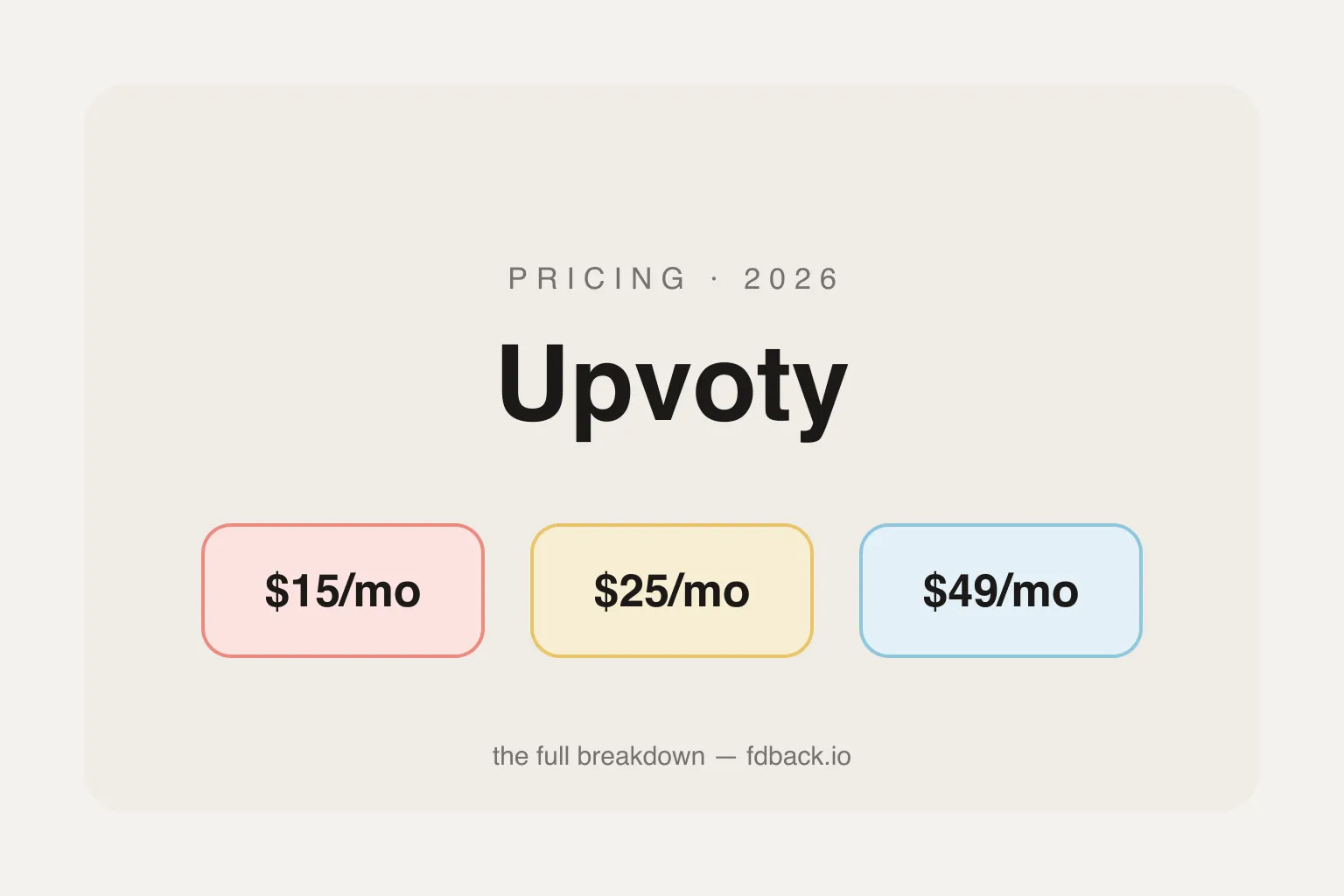
Upvoty Pricing Explained: What You Actually Pay in 2026
Upvoty costs $15–$49/month flat with no free plan. Full 2026 breakdown of the new Power/Super/Hyper tiers, what each gates, and a $15/mo alternative with a free plan.
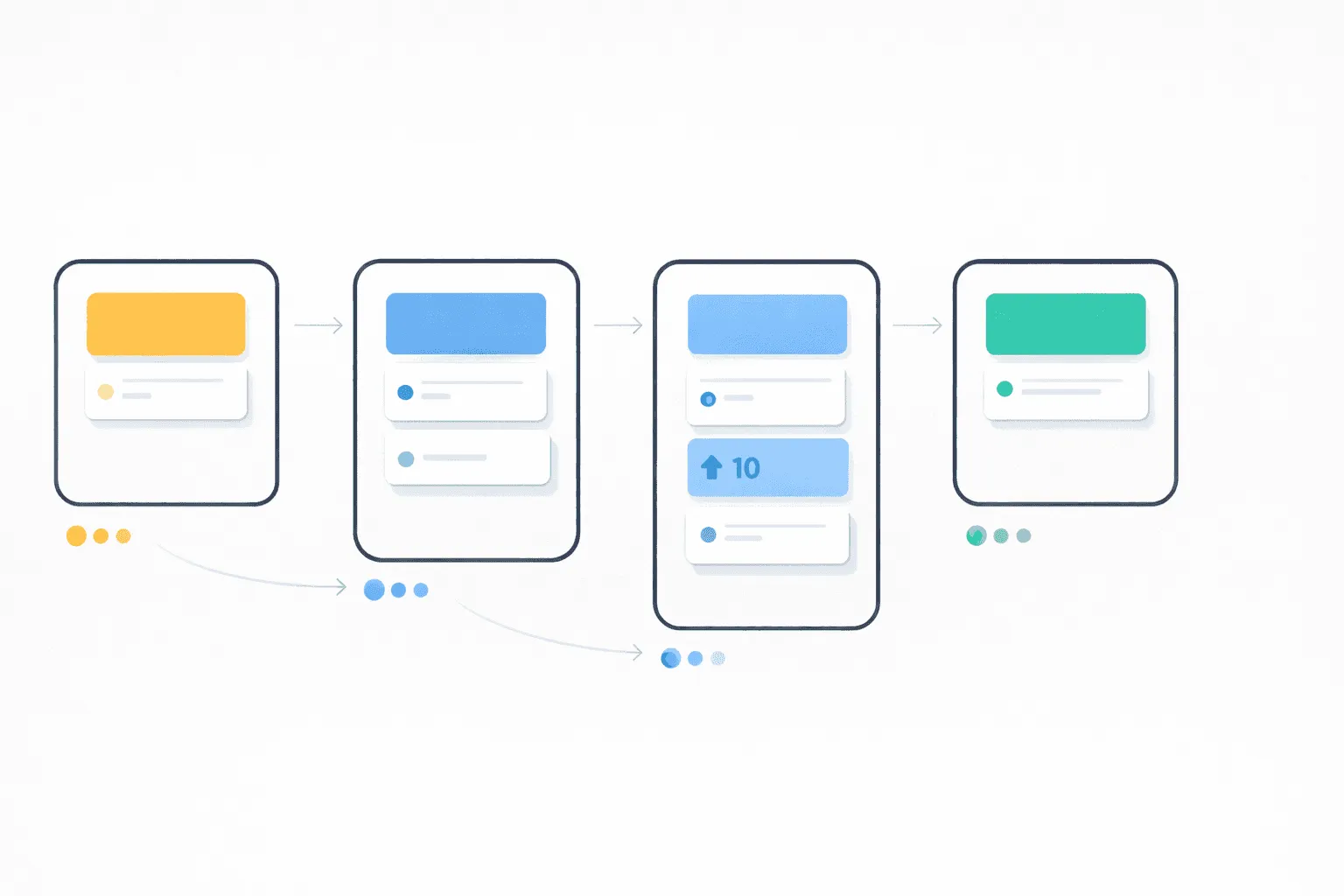
Public vs Private Roadmap: Which One Should Your SaaS Choose?
Should your product roadmap be public or private? Honest pros and cons of each, a hybrid model that works, and a decision framework by company type.
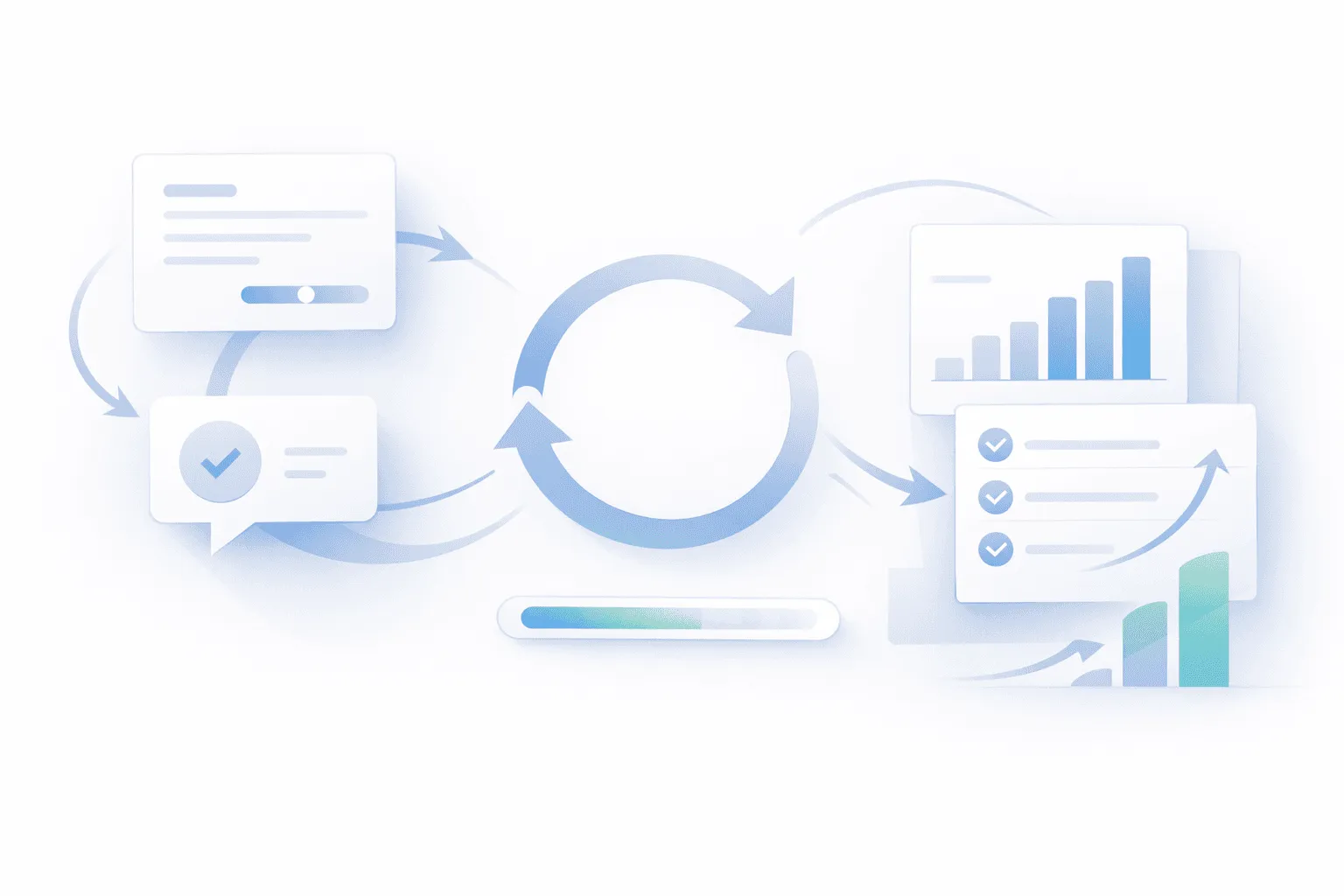
How to Close the SaaS Feedback Loop (And Why It Reduces Churn)
Turn user requests into a prioritized roadmap. Let your community vote on what’s next, so you can build exactly what they’ll pay for.
The 7 Best Frill Alternatives in 2026 (Honestly Compared)
Frill's $25/mo plan caps you at 50 ideas, and add-ons push the real cost to $150+. We compare 7 Frill alternatives on pricing, features, and limits.
The 7 Best UserVoice Alternatives in 2026 (Honestly Compared)
UserVoice starts at $999/month with a 200-user cap and no public roadmap. We compare 7 alternatives on pricing and features — from $0 to enterprise.
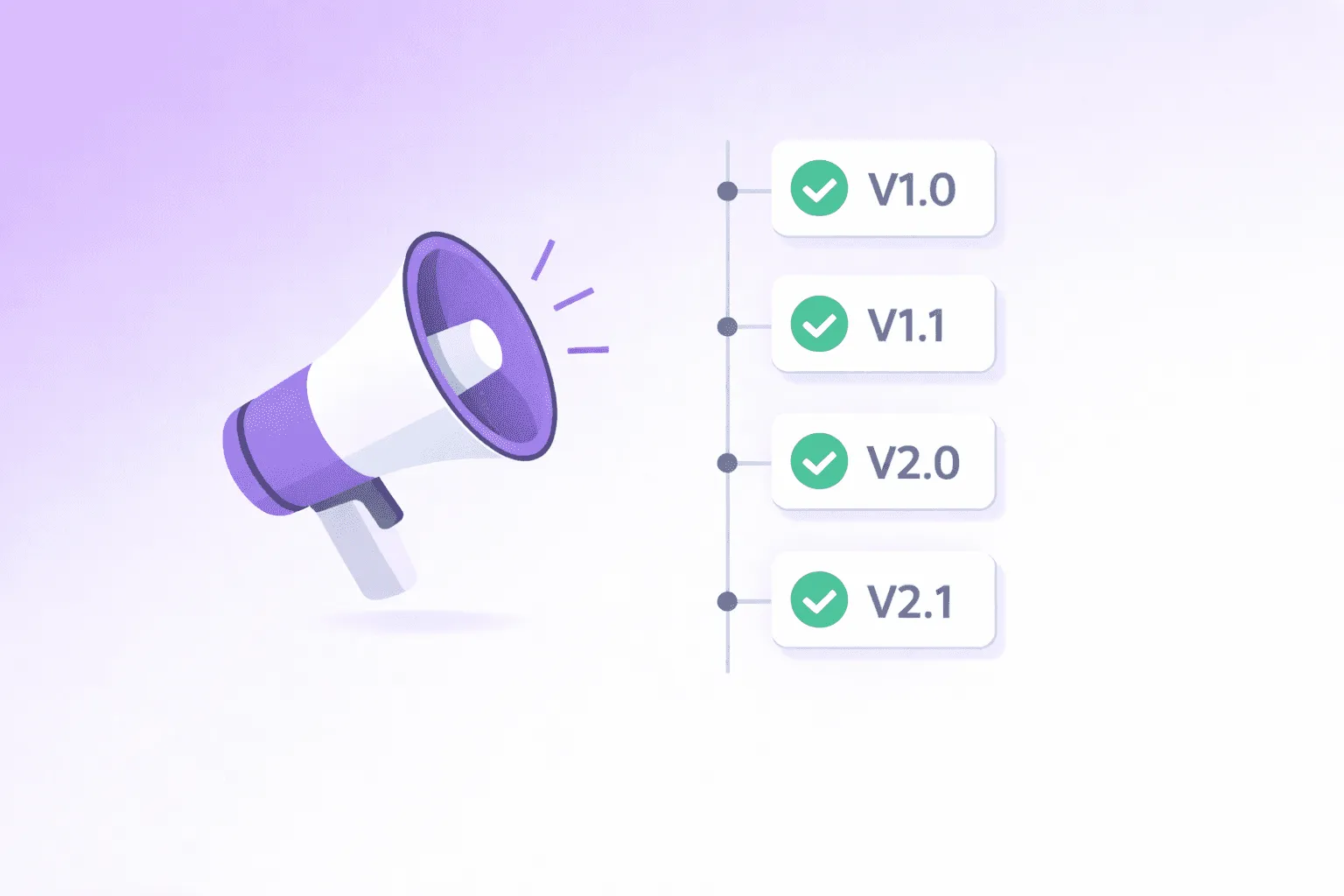
SaaS Changelog Best Practices: The Complete Guide to Product Updates That Reduce Churn
Learn how to write a SaaS changelog that drives feature adoption. Includes examples, setup guide, mistakes to avoid, and how to notify voters.