Public vs Private Roadmap: Which One Should Your SaaS Choose?
9 min readUpdated July 30, 2026
On this page▾
Here’s the short answer: most SaaS companies selling to small and mid-sized businesses should run a public roadmap — with status columns instead of dates. Most enterprise vendors, companies in winner-take-all markets, and teams mid-pivot should keep theirs private. And a large group in between should run a hybrid: public themes and statuses, private dates and details.
That’s the conclusion. The rest of this article is the reasoning, because both camps undersell the other side’s case: public advocates gloss over the real costs of committing in public, private defenders gloss over the trust they leave on the table. Which trade-off you should accept depends on who you sell to, how you compete, and how predictable your delivery actually is.
What “Public” and “Private” Actually Mean
Before weighing the options, it’s worth being precise, because “public roadmap” covers a wide range of exposure levels.
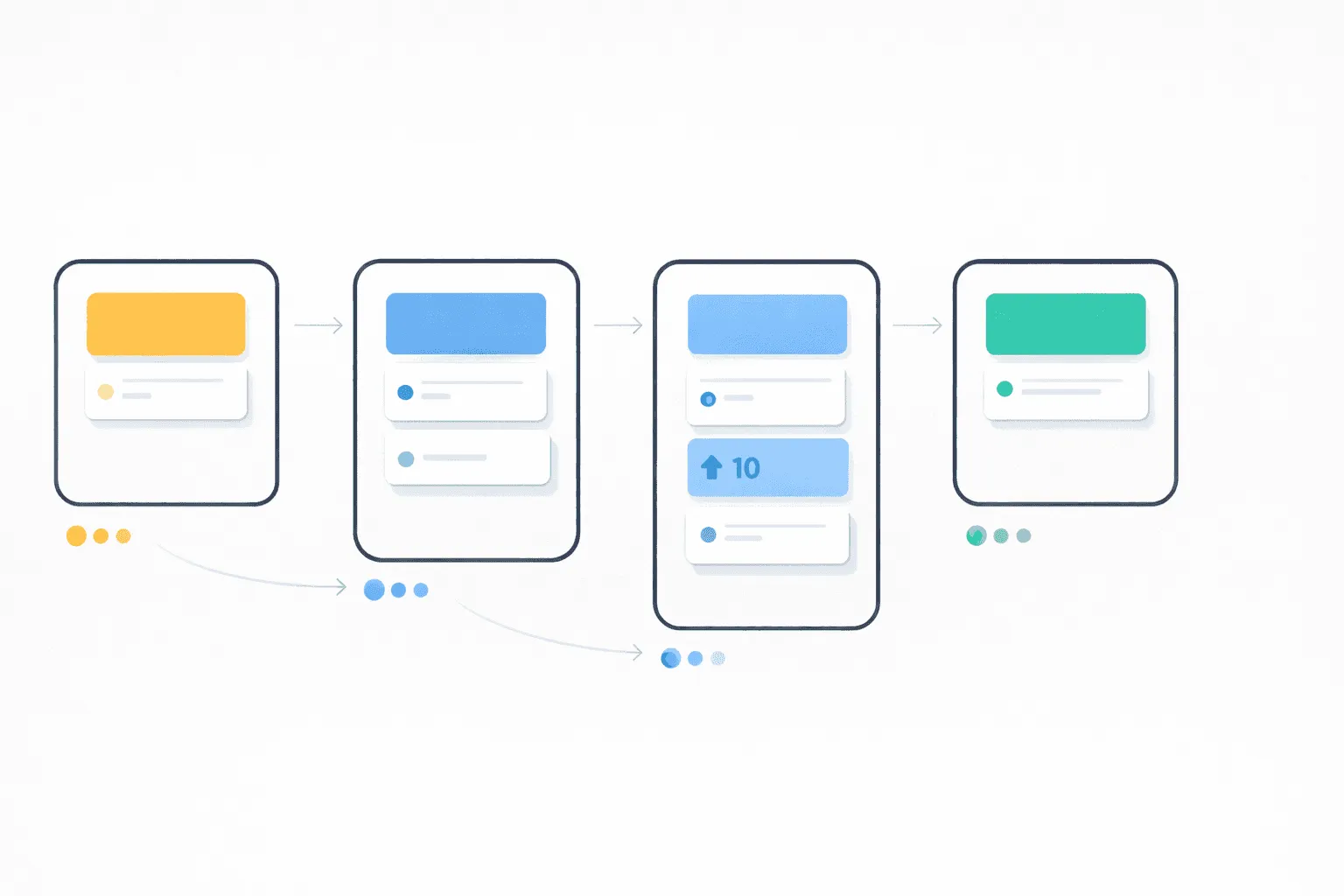
A fully public roadmap is a page anyone on the internet can view — customers, prospects, competitors, journalists. It typically shows features organized by status (Under Consideration, Planned, In Progress, Shipped) and often lets users vote and comment.
A private roadmap is internal-only: a Notion doc, a Linear project, a slide deck for the board. Customers learn about features when they ship, or when sales chooses to share something under NDA.
Between those extremes sit variations: customer-only roadmaps, selective sharing with key accounts, and hybrids that publish themes but withhold timelines. The best answer for many teams isn’t at either pole.
The Case for a Public Roadmap
Accountability that compels shipping
A public roadmap is a commitment device. When “In Progress” is visible to every customer, letting an item rot there for six months has a visible cost. Teams with public roadmaps tend to scope smaller and ship more regularly — not because the roadmap improves velocity, but because a stale public board embarrasses in a way a private Jira backlog never does.
Trust you can’t buy elsewhere
Prospects evaluating a SaaS product are asking one question your marketing site can’t answer: is this product alive? A public roadmap with items moving through columns answers it instantly. It shows momentum, direction, and a team that isn’t hiding. For early-stage products with incomplete feature sets, it reframes every gap: “we know, it’s planned” is a far better answer than silence.
Churn deflection
When a customer needs a feature you don’t have, they check whether you’re building it. If they can see it’s Planned or In Progress, many will wait. If they see nothing, they assume nothing is happening and start evaluating alternatives. A public roadmap turns “they don’t have X, I’m leaving” into “X is coming, I’ll stay.” This is the single most direct retention mechanism a roadmap offers, and it’s the core of a healthy feedback loop.
Better prioritization signal
A public roadmap connected to a voting board gives you demand data instead of anecdotes — what your whole user base wants, not what the loudest customer on the last sales call asked for.
The honest downsides
None of that is free. Three costs are real:
Expectation risk. Anything you publish reads as a promise, no matter how many “subject to change” disclaimers you attach. When you kill a Planned item — and you will, because plans change — some users who were waiting for it will be genuinely angry. Status columns without dates soften this considerably, but they don’t eliminate it.
Competitor visibility. Your competitors will read your roadmap. For most SaaS products this matters less than founders fear — knowing a feature is coming and shipping it well are very different things, and most competitors are too busy with their own backlogs to react. But in genuinely head-to-head markets racing on feature parity, telegraphing your next two quarters is a real cost.
Maintenance burden. A stale public roadmap is worse than none. If nothing has moved in three months, the page that was supposed to signal momentum now signals abandonment. Going public means committing to a weekly 15-minute update ritual, forever.
The Case for a Private Roadmap
Full flexibility
A private roadmap can change every week without anyone noticing. You can kill features, pivot segments, chase an unexpected opportunity, or throw a quarter at technical debt — all without explaining yourself to customers. For teams whose strategy is genuinely in flux (early pivots, new market entries), this freedom is worth a lot.
Strategic secrecy
If your next release is a genuine differentiator — something competitors would need months to copy and would start copying the day they learned of it — announcing it early hands them a head start. Private roadmaps let you ship first and announce from a position of strength. This is also the norm in enterprise deals, where roadmap details are shared selectively under NDA as a sales asset rather than published for everyone.
No public failures
When a private roadmap slips, nobody outside the building knows. There’s no thread of customers asking why the feature promised “soon” is now a year late, no screenshot of your 2024 roadmap circulating as evidence you don’t deliver.
The honest downsides
You lose the trust signal entirely. To customers and prospects, a product with no visible roadmap is a black box. They can’t tell whether you’re about to ship the feature they need or whether development has stalled. Every “is X on your roadmap?” support ticket gets a vague non-answer, and vague non-answers erode confidence.
Your feedback stays scattered. Without a public destination for requests, feedback arrives through support tickets, sales calls, and Slack messages — siloed, unquantified, and biased toward whoever shouted last. You give up the voting signal that makes prioritization data-driven.
Silence reads as stagnation. Customers who can’t see progress assume there isn’t any. That assumption drives churn quietly: nobody files a ticket saying “I’m leaving because I don’t know what you’re building.” They just leave.
The Hybrid Model: Public Themes, Private Details
The public/private question isn’t binary, and the hybrid model captures most of the upside of each side. It works on one principle: be public about direction, private about execution.
Concretely:
-
Publish statuses, not dates. Your public roadmap shows Under Consideration → Planned → In Progress → Shipped. Your internal roadmap has the sprint plans, deadlines, and resourcing. Customers see momentum; you keep scheduling flexibility. (This is the standard advice in our public roadmap guide, and it’s the single biggest de-risker for going public.)
-
Publish themes, not specs. “Improved reporting and exports — Planned” tells customers you’re investing in the area they care about without committing to a specific implementation a competitor could pre-empt or a customer could hold you to.
-
Keep a private layer. Technical debt, infrastructure work, unvalidated bets, and anything competitively sensitive stays internal. Your public roadmap might show 20 items while your internal one has 200. That’s not dishonesty — it’s editing.
-
Share selectively when it matters. For enterprise prospects who need forward-looking commitments, share dated roadmap details under NDA in the sales process. The public layer builds broad trust; the private layer closes specific deals.
Most tools built for this workflow — fdback included — assume the hybrid model by default: the public board shows status columns and collects votes, while dates and internal planning live in whatever project tool your team already uses. You don’t have to choose between transparency and flexibility; you choose what to expose.
Which Is Right for You? A Decision Framework
Work through these by company type. Take the row that matches you closest, then adjust for the exceptions below.
Early-stage / indie SaaS (pre-PMF to ~$1M ARR), selling to SMBs or prosumers: Go public. Your biggest liabilities are looking dead and looking incomplete, and a public roadmap fixes both. Your competitors copying your roadmap is a distant hypothetical; your prospects doubting your momentum is a today problem. Use status columns, no dates.
Growth-stage SaaS selling to SMB/mid-market: Go hybrid, leaning public. Publish a curated public board with voting to keep the churn-deflection and prioritization benefits, keep dates and resourcing internal. Your roadmap is now also a sales asset — sales can link prospects to it instead of making verbal promises.
Enterprise-focused vendors: Lean private with selective disclosure. Enterprise buyers want dated commitments under NDA, not a public kanban board, and your legal team will not enjoy public forward-looking statements near renewal negotiations. A public changelog (what shipped, not what’s coming) gives you the alive-and-improving signal with none of the commitment risk.
Companies in head-to-head feature races: Private or thin hybrid. If you’re in one of the rare markets where a faster-moving competitor genuinely will re-prioritize based on your roadmap, publish shipped work and broad themes only. Announce features at launch.
Teams mid-pivot or with unpredictable delivery: Private, for now. If you can’t keep items moving through columns at least monthly, a public roadmap will hurt you more than help. Fix the delivery cadence first, then go public. A roadmap you launch and abandon is worse than one you never launched.
Two overrides that trump company type:
- If your users already ask “is X coming?” weekly — via support, sales, or social — you have demand for a public roadmap regardless of segment. You’re already answering the question one customer at a time; a public roadmap answers it once for everyone.
- If your team resents updating it, don’t launch it. The failure mode of public roadmaps isn’t overexposure — it’s staleness. Only go public if someone owns the weekly update.
If You Go Public, Do It Like This
The full setup process deserves its own article — and it has one: our step-by-step guide to building a public product roadmap covers tools, column structure, seeding, and notifications. But the three rules that matter most for the public/private trade-off specifically:
No dates. Dates convert a communication tool into a contract. Status columns communicate everything users need — direction and momentum — without the breach-of-promise risk.
Curate ruthlessly. Publish only items you’re reasonably confident about and that users care about. Everything speculative or internal stays private. A 15–30 item public board is the sweet spot.
Move things visibly. The value of a public roadmap comes from motion, not existence. Weekly status updates, even small ones, are what make the page a trust signal instead of a liability.
FAQ
Should a startup’s roadmap be public or private?
Public, in almost all cases. Early-stage products benefit most from the trust and momentum signal, and suffer least from competitor visibility — competitors rarely care yet, but prospects deeply care whether your product is alive and improving. Use status columns without dates to avoid overcommitting.
Won’t competitors steal my roadmap ideas?
They can see them, but seeing isn’t shipping. A competitor who learns you’re building an integration still has to design, build, and launch it — and most are consumed by their own backlogs. The exception is a direct head-to-head feature race with a faster-moving rival; in that specific case, keep unannounced differentiators private and publish only themes and shipped work.
Can I make my roadmap public but hide the dates?
Yes, and you should — that’s the standard model. Public roadmaps built on status columns (Planned, In Progress, Shipped) show direction and momentum without committing to timelines. Keep dates, sprint plans, and resourcing in your internal tools, and share dated commitments only selectively, for example with enterprise prospects under NDA.
What happens if I put something on a public roadmap and then cancel it?
Move it back a column or remove it, and say why in one honest sentence on the item (“We’ve deprioritized this to focus on X”). Some users will be disappointed, but visible honesty costs far less trust than letting a dead item sit in “Planned” for a year. This is also why you publish statuses instead of dates: an item sliding backward is a status change, not a broken promise.
More insights to explore
Featurebase vs Nolt 2026: All-In-One Suite or Minimal Board?
Featurebase bundles feedback, support, and AI at $29–99 per seat. Nolt keeps it to a $29/mo board with no changelog. Honest 2026 comparison with real costs.
SaaS Changelog Best Practices: The Complete Guide to Product Updates That Reduce Churn
Learn how to write a SaaS changelog that drives feature adoption. Includes examples, setup guide, mistakes to avoid, and how to notify voters.
Feature Voting Boards: The Complete Guide for SaaS Teams
Complete guide to setting up feature voting boards for SaaS. Includes setup steps, best practices, and tools that close the feedback loop.
UserVoice Pricing Explained: What You Actually Pay in 2026
UserVoice starts at $999/month with a 200-user cap. We break down every plan, explain the hidden costs, and compare alternatives that cost 95% less.
Upvoty Pricing Explained: What You Actually Pay in 2026
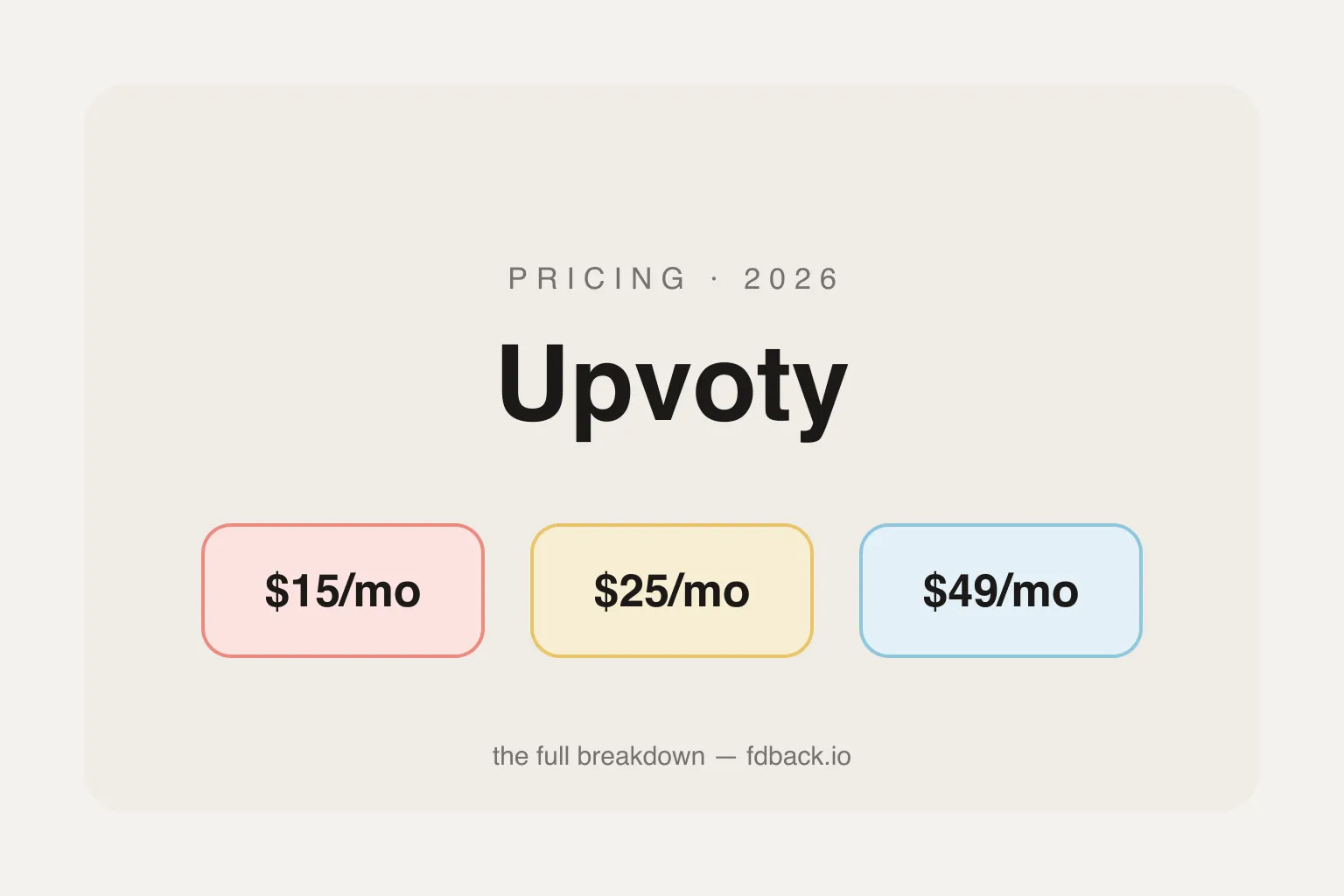
Upvoty costs $15–$49/month flat with no free plan. Full 2026 breakdown of the new Power/Super/Hyper tiers, what each gates, and a $15/mo alternative with a free plan.
Best Feedback Tools for SaaS Teams in 2026
An honest comparison of the best SaaS feedback tools in 2026 - from $15/mo to $999/mo. Feature voting, roadmaps, changelogs, and pricing compared side by side.